Abdulaziz khan Madrasah
Day 14
Hello everybody. Today's practice was planned Abdulaziz khan Madrasah. The weather is hot and sunny ☀️ . After all of us got together, we started the practice.

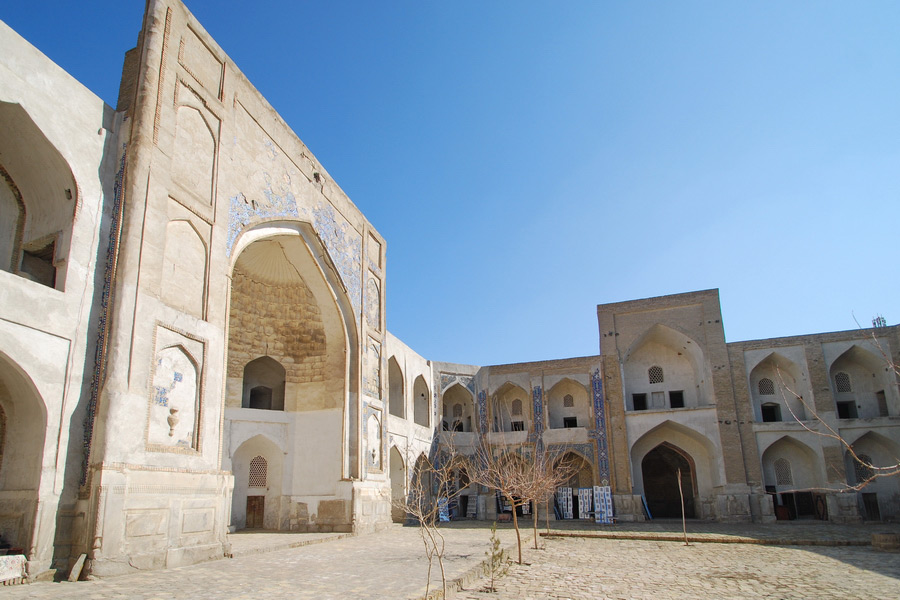
Abdulazizkhan Madrasah in Bukhara is tangible evidence of the advanced cultural developments which have been realized on the territory of Central Asia for centuries.
The madrasah was built in 1652 by Abdulaziz Khan of the Ashtarkhanid Dynasty. Constructed next to Mirzo Ulugbek Madrasah nearly two hundred years after the great astronomer’s death, Abdulazizkhan Madrasah was the last significant madrasah to be built in Bukhara. Together, the two schools form a single architectural complex and are counted among the major historical monuments of Bukhara.
Yet these educational institutions differ from each other not only in their architectural design and ornamentation, but also in their original educational goals. Ulugbek, as a ruling scientist and educator, viewed learning in the context of its national significance, believing the development of science to be the ultimate goal of education. Abdulaziz Khan, meanwhile, supported patrons of the arts and was drawn more to mystical poetry and theology than to the field of science.
Ulugbek Madrasah adhered to a strict blueprint, having been designed with the rigid study of the sciences in mind. Although an educational institution, its walls were adorned with sayings from the Koran.
In contrast, Abdulazizkhan Madrasah was an ornate building, constructed using every decorative technique available at that time. Majolica, stone and ganch carvings, tile mosaics, fine paintings, gilding and the like were all employed to enhance the school’s appearance. The walls were decorated not with religious verses but with poetic lines.
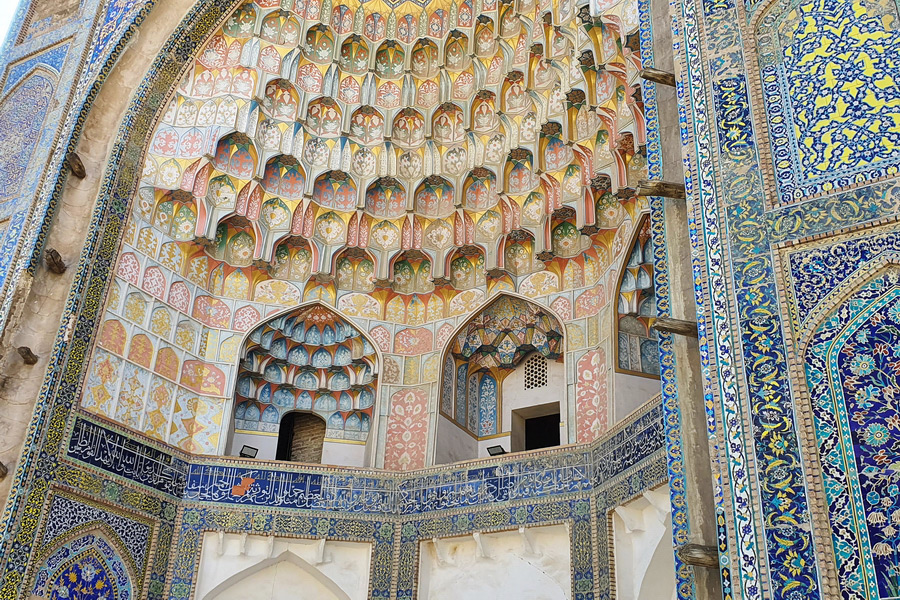


In the XV-XVIII centuries the woodcarver’s era prospered in Central Asia. There is an art carving in the decoration of mosques, madrasas, headstones, gates, etc. It is known that Ulughbek was not only famous ruler but the great scholar and patron of the sciences. His first madrasa was built in 1417 in Bukhara. Abdulaziz Khan Madrasah was his last monumental building in the capital of the Bukhara Khanate.


The practice finished. Thank you for your attention 😊😊


Комментарии
Отправить комментарий